Tajine types
Want to master Moroccan cooking? Learn how to buy a tajine with this essential guide to choosing the perfect one for your kitchen.
This traditional North African cookware, is renowned for its unique design and ability to create delicious, slow-cooked meals.
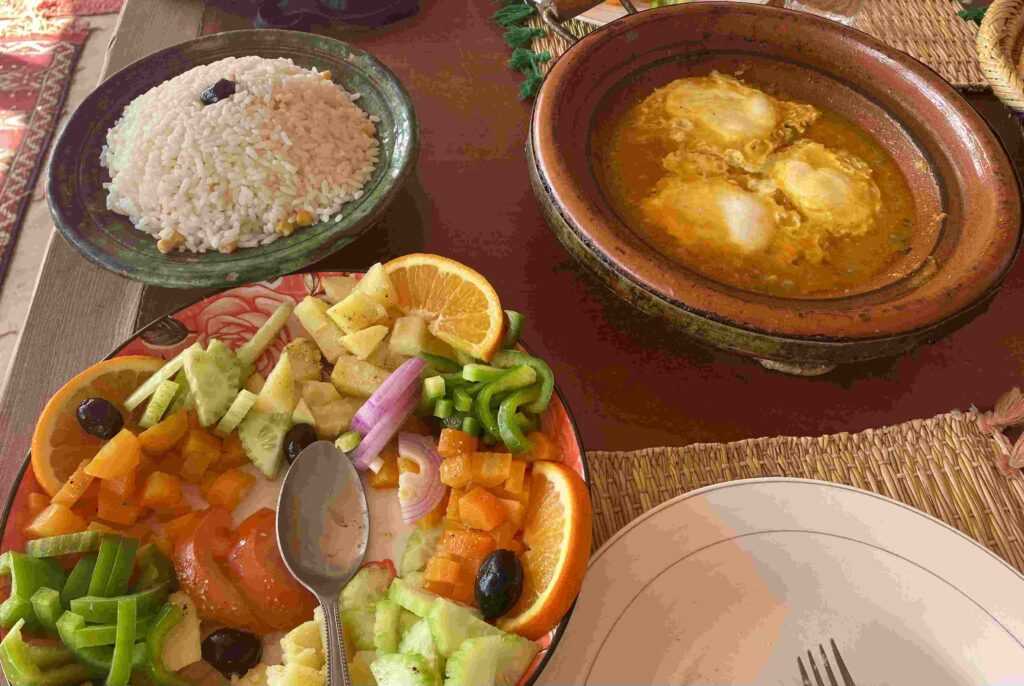
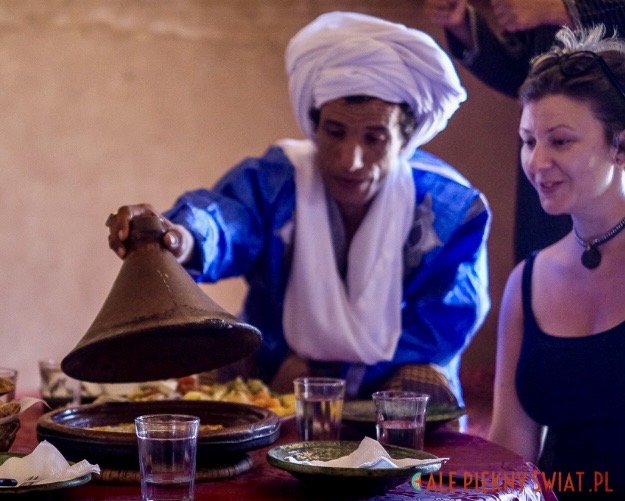
There are the two main types of tajines: made of ceramic or of different types of metal. Both kinds are ideal for slow cooking. The clay tajines often have a decorative element, while aluminium, steel or cast iron tajines offer durability and better heat retention. Consider your cooking preferences and choose the type that aligns with your needs.
Clay tajines: what to do before use
Clay tajines – amazingly beautiful, often painted in traditional designs – are great souvenirs that will make you remember colours of Morocco back at home. Yet, ensuring the longevity of your clay tajine requires careful preparation to prevent breakage during the initial high-temperature cooking process.
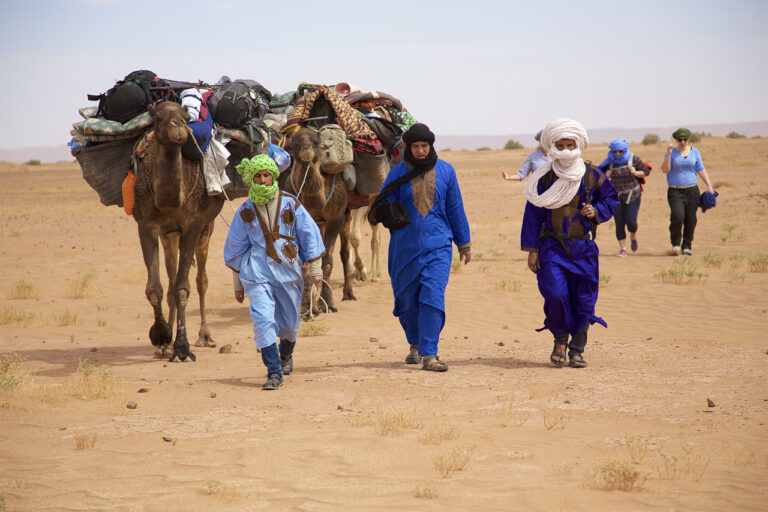
Saharan nomads offer a straightforward solution: immerse the tajine in cold water overnight. Prior to your inaugural cooking, sauté 5-6 sliced onions in olive oil for about an hour, stirring from time to time. This simple ritual strengthens tajine’s cover layer, ensuring it remains a cherished kitchen companion for an extended period.
Aluminium tajine: light and durable
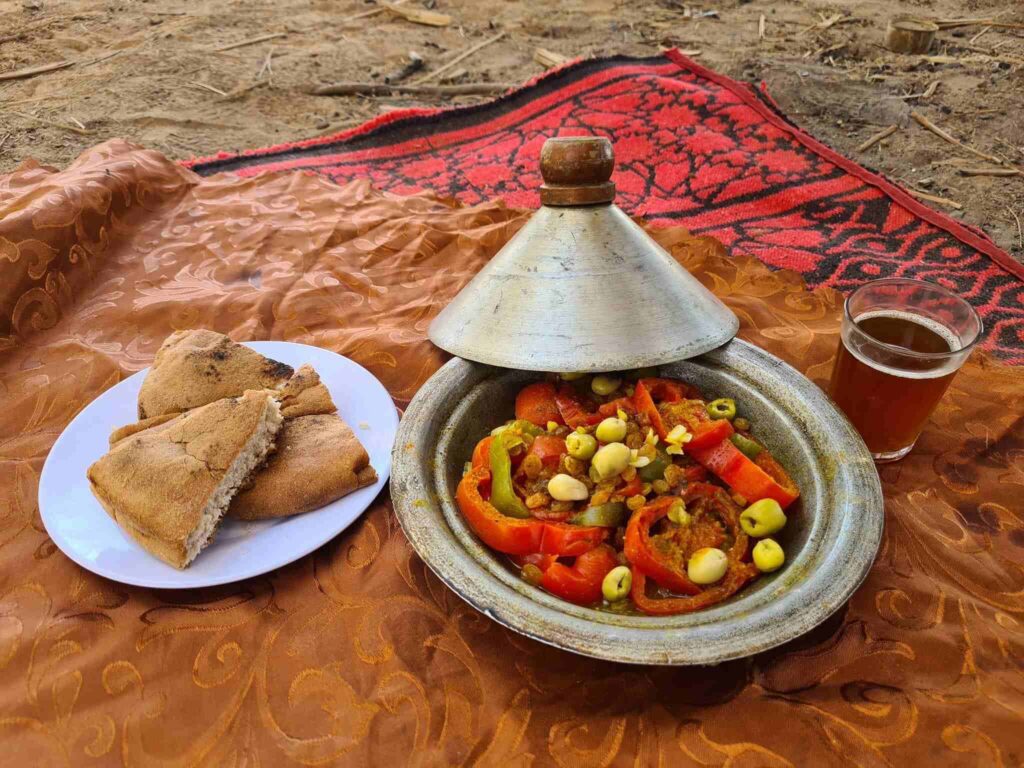
Alternatively, if you’re seeking a robust dish that prioritises durability over artistic appeal, opt for a metal tajine.
Especially tajines made of aluminium are ideal for travel, as they are light, resilient against breakage, making them the perfect companion for any excursions.
Whether used at home kitchen, or on a camp fire during vacation, a metal tajine ensures reliability on the go. We recommend that you ensure it comes equipped with a wooden handle on top instead of a plastic one.
Planning a trip to Morocco?
Contact us to create your perfect Morocco tour.
Mohamed grew up in M’hamid El Ghizlane, guiding camel caravans and 4×4 expeditions for over 20 years. Agata joined after falling in love with the desert’s silence, culture, and authenticity. Together, we created Desert Stories and Desert Camp Chraika — an eco-friendly, locally rooted camp. Our mission is simple: to share the real Sahara through meaningful, safe, and honest desert experiences.